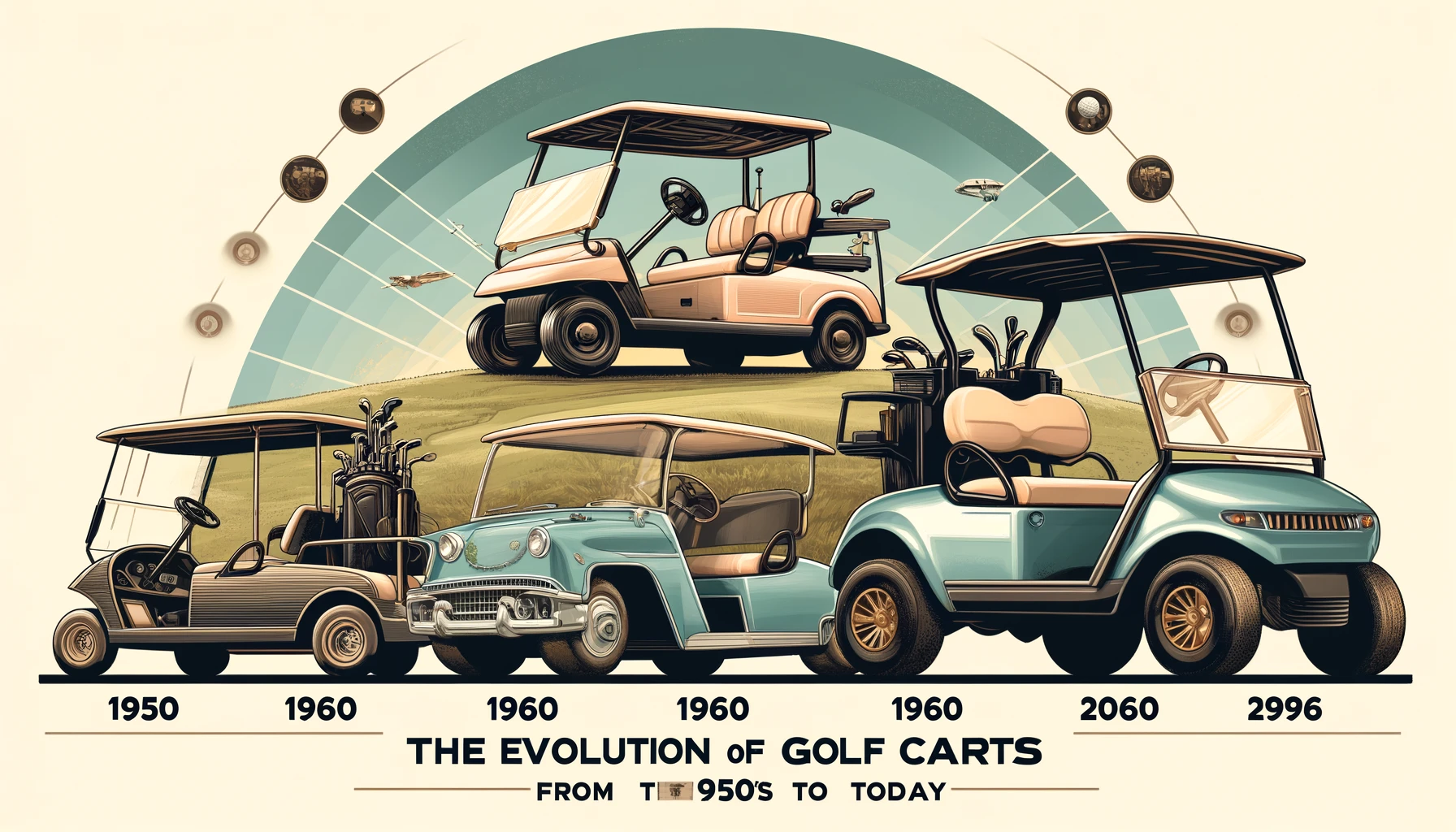
The game of golf is not just about golf balls, irons, clubs, wedges, putters or equipment. A golf course is incomplete without golf carts. These humble looking, yet versatile vehicles of the golf course are close friends of golfers. These environment friendly vehicles of the course have a long history in the evolution of the game of golf itself.
The journey of golf carts didn’t begin in the modern day. In fact, the proto-types of golf carts existed in the fifteenth century Scotland, where the game of golf was originally invented. The ancient golf carts didn’t look like the golf carts of the present times, leave alone being driven by electric or batteries.
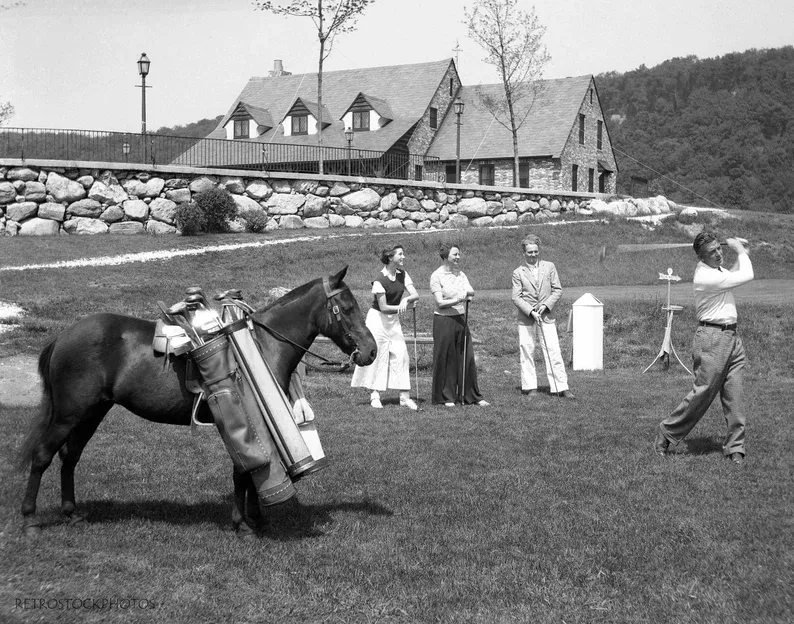
Horses carrying golf bag o golf courses.
Originally, horses were used to carry golf bags on the course.
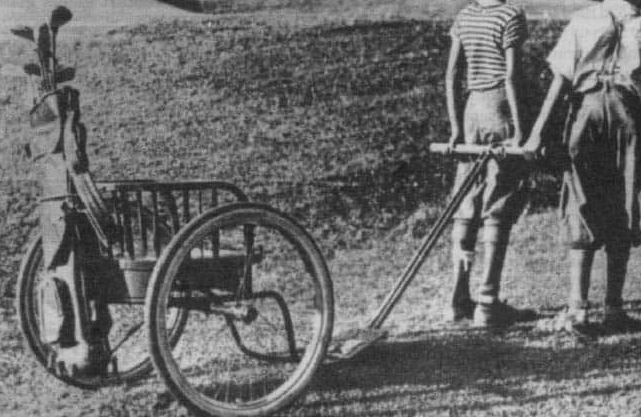
Hand-pulled Golf Carts or “Mobility Vehicles”.
In the ancient times, golf carts were used as “mobility vehicles” pulled by caddies, and were used by elderly and specially-abled golfers who were unable to walk the golf course over the eighteen holes. The use of these buggies emerged almost accidentally. However, these golf carts, pulled by hands, were rudimentary, and had limited range and power. Thus, these did not become popular or did not have widespread popularity or use.
The golf carts that were used in the eighteenth and nineteenth century were very crude. With the loud and obnoxious sounds, they made, carts were banned in the golf courses in those days, as it hindered the very spirit of the game.
Traditional golf carts were capable of carrying only two golfers and their clubs. They weighed between 900 and 1,000 pounds, and were 4 ft. wide, 8 ft. long and 6 ft. high. The speed limit was up to 24 km/hr. These golf carts were run by electricity, and the inspiration of these electricity driven golf carts came from warehouses and factories, where electric carts were used to benefit the transportation of manufactured goods in the factories.
Reportedly, the idea of introducing golf carts came to J.K Wadley of Texarkana, who saw that a three-wheeled electric cart was being used to transport senior citizens to a grocery store in Los Angeles. These golf carts needed a higher cost to be built, but the range was comparatively much lower and the size was bulky. Thus, these carts could not gain any popularity, as they should have been.
The first ever golf cart was a custom-made golf cart, made by Lyman Beecher. Beecher was a specially-abled golfer, whose physical shortcomings never stopped him from becoming a golfer of great repute. In 1932, in his home state, Florida, Beecher made a customized cart, that looked like a rickshaw, and could be carried by a couple of caddies. This facilitated Beecher is getting round the course with lesser difficulties with his arthritis, which stopped him from following his passion for the sport of golf.
Though the idea introduced by Beecher was not widely accepted in the various golf courses of the world, the need to introduce and use golf carts actually surged after the post Second World War era, in the early 1950s. R.J Jackson, who happened to be a bigshot and a big business tycoon in Texas, received a patent to make a three-wheeled, gas driven cart, of which, specially-abled golfers were again the primary clienteles. This time, due to the surge in the number of senior golfers, who were enthusiastic and passionate about the sport, these golf carts made by R.J Jackson, were accepted by various golf clubs across the world, primarily due to the benefits of the senior and specially abled golfers, as well as the environment-friendly nature of the golf carts, as they did not produce any loud sound or smoke.
In 1951, Eddie Susalla, who was the Associate Golf Professional to Jimmy Hines, the then Head Professional at Thunderbird, came up with a golf cart that was about the change the whole perspective of golf carts and popularize it in almost all reputed golf clubs. Following this perspective, the Marketeer Company began producing golf carts in 1952, followed by EZ-GO in 1954, Cushman in 1955, Club Car in 1958, Taylor Dunn in 1961 and Harley Davidson in 1963.
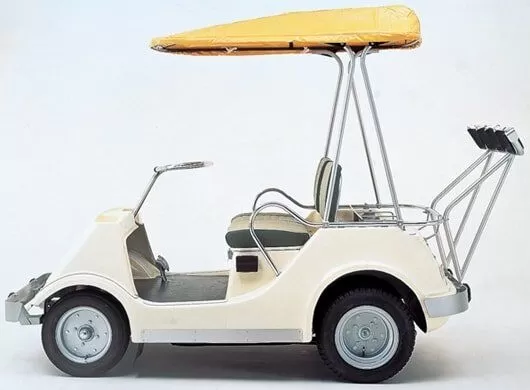
Yamaha’s Golf Cart, first produced in 1972.
Yamaha’s golf cart, first produced in 1972, revolutionized the concept of using golf carts in the golf clubs. These carts had improved battery life, longer range, and greater reliability. Yamaha’s golf carts became a standard in golf clubs of Arizona, Florida, and California.
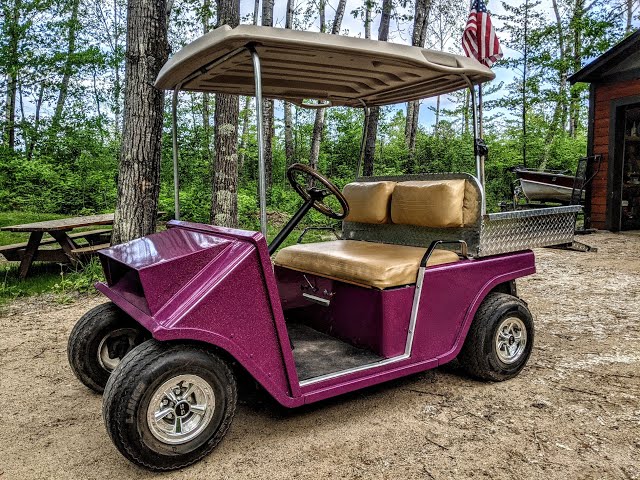
Golf Carts in 1980s.
The technological improvements in the 1970s to 1990s build up strict competition among the makers of golf carts world-wide. The competition was mainly based on who could make more comfortable and more durable golf carts that would help the golfers to play eighteen holes on the golf courses without any hassle.
Golf carts evolved into Neighbourhood Electric Vehicles (NEM), and came to be used in resorts, campuses, airports etc., in the late 1990s, and early 2000s. The golf carts during these times came with windshields, radios, and enclosure for weathers.
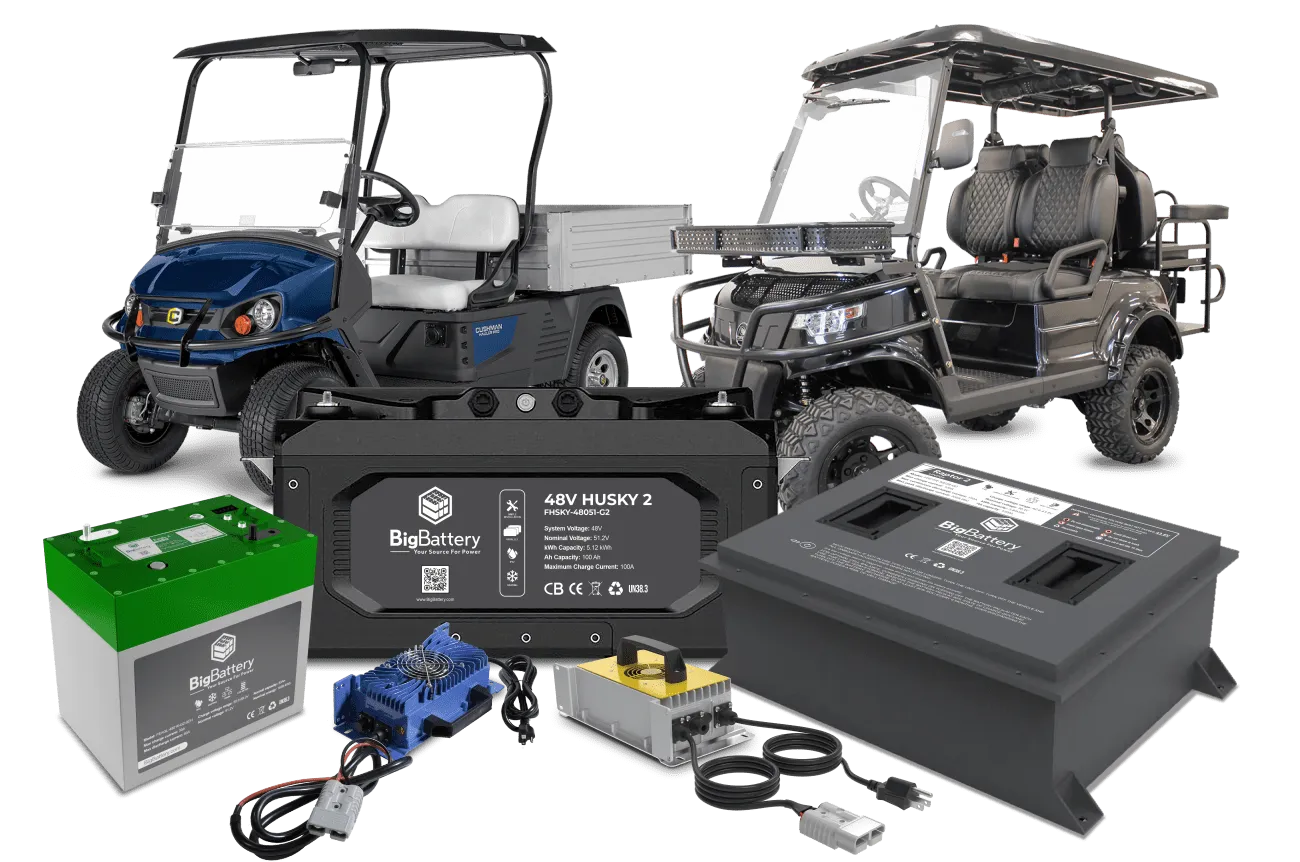
Lithium Ion Batteries in Golf Carts.
From 2010, lithium ion batteries were introduced in golf carts for longer life and reliability on the courses. Golf courses have also introduced GPS-enabled carts. Now, luxury golf carts, that mimic fancy cars like Cadillac, Bentley, Hummer, etc., have also become popular.
From the early twentieth century, golf carts have come a long way. Statistics show that above 2 million golf carts are in operation in various golf courses of the U.S.A. Asian countries like Japan, China, India, and even South Korea have also adopted and popularized the use of golf carts, not just in their golf courses, but also in national parks, wildlife sanctuaries, and beach resorts.
Three popular golf carts which standout today, according to Forbes, among reputed golfers of the world are:
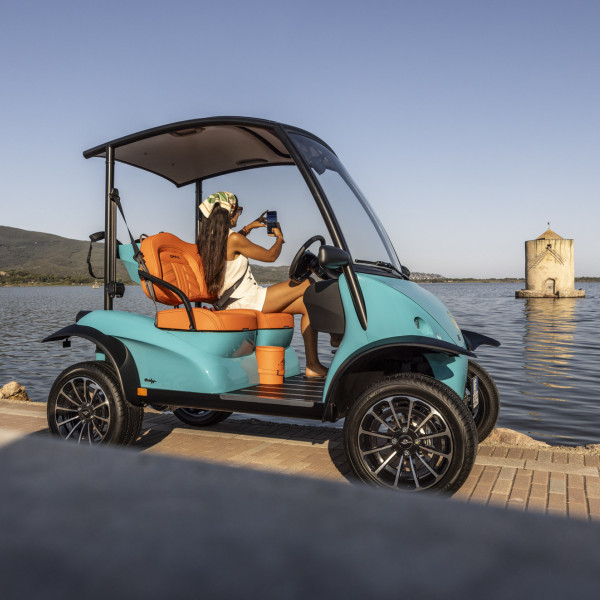
Garia Monaco Golf Carts
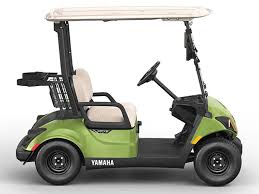
Yamaha Drive2 PTV PowerTech AC.
2. Yamaha Drive2 PTV PowerTech AC: These high-performance carts are specially designed, combining power and comfort, with an ergonomic design, and is available in luxury colour options.
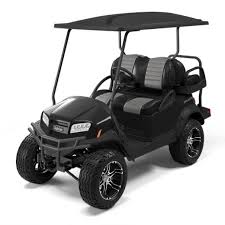
Club Car Onward HP Li-Ion.
3. Club Car Onward HP Li‑Ion: Another high-performance cart, built with Lithium ion batteries, and has customized wheels and seats and extensive suspension for smooth rides.
 Add Listing