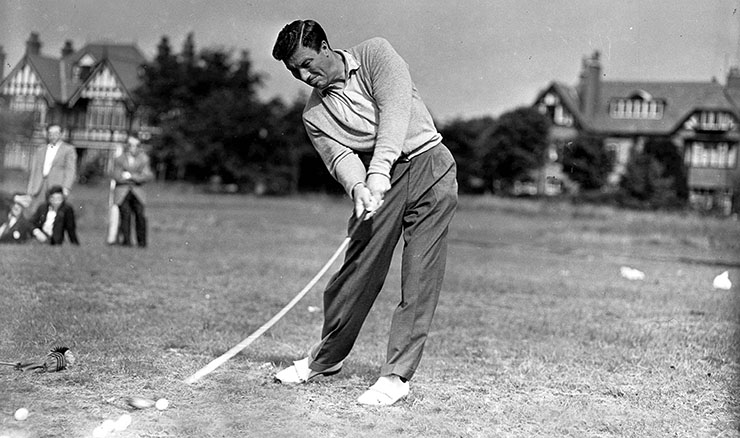
Peter William Thomson wasn’t just a five-time Open Champion, he was a visionary who saw golf as both sport and art. From the windswept links of Scotland to the sun-drenched fairways of India, Thomson’s legacy is etched not only in scorecards but in soil. And nowhere did his passion resonate more deeply than in India.
The Champion’s Journey
Born in Melbourne in 1929, Peter Thomson turned professional in 1949 and quickly became one of the most cerebral and consistent players in golf history. His dominance at The Open Championship, winning in 1954, 1955, 1956, 1958, and 1965, remains one of the most iconic streaks in the sport. He was the only golfer in the 20th century to win three consecutive Opens.
Beyond the British Isles, Thomson claimed nearly 100 professional victories across Australia, Asia, and Europe. His playing style was strategic, his demeanor composed, and his understanding of course conditions unmatched.
Victories on Indian Turf
India wasn’t just another stop on Thomson’s global tour, it was a place where he thrived. He won the Indian Open three times: in 1964 (the inaugural edition), 1966, and 1976. His 1964 victory at Delhi Golf Club was historic, setting the tone for the tournament’s prestige and inspiring Indian golfers to dream bigger. He was the only golfer who came to play in India after a Major victory until Rory Mcilroy did it this year at DGC after winning the Masters.
Thomson’s repeated success in India wasn’t just about skill, it was about connection. He respected the nuances of Indian courses, adapted to their climate and culture, and embraced the warmth of Indian hospitality.
From Fairways to Blueprints
After retiring from competitive play, Thomson co-founded the design firm Thomson, Wolveridge & Perrett. His philosophy was simple yet profound: courses should challenge the mind, harmonize with nature, and reward strategic play.
He helped shape over 100 courses worldwide, including layouts in Australia, New Zealand, Japan, China, and the Middle East. His redesign of the Eden Course at St Andrews and his work across Southeast Asia cemented his reputation as a master architect of golf.
Designing India’s Golfing Future
Thomson’s romance with India deepened through his design work. He didn’t just build courses, he sculpted experiences. His contributions include:
– Classic Golf & Country Club (Gurgaon): India’s first international-standard course, designed in the 1990s. It hosted Asian Tour events and remains a benchmark for championship golf.
– Kensville Golf Club (Ahmedabad): A strategic desert-meets-green layout that reflects Thomson’s adaptability to local terrain.
– Aamby Valley Golf Course (Lonavala): A dramatic course nestled in the Sahyadris, blending elevation with elegance.
– Royal Calcutta Golf Club (RCGC): Thomson’s redesign brought modern strategy to one of the oldest golf clubs in Asia, enhancing its legacy while preserving its heritage.
– Delhi Golf Club (DGC): His redesign of DGC respected its Mughal-era ruins and natural contours, while elevating its playability for international tournaments.
Each of these courses carries Thomson’s signature, not just in bunkering and routing, but in the way they invite thoughtful, rewarding play. His work in India wasn’t transactional; it was transformational.
A Legacy Rooted in Indian Soil
Peter Thomson’s relationship with India was layered, competitive, creative, and cultural. He didn’t just win here; he built here. He didn’t just visit; he invested.
His victories gave Indian golf international credibility. His designs gave it infrastructure. And his presence gave it soul.
In the story of Indian golf, Peter Thomson isn’t just a chapter, he’s a cornerstone.
 Add Listing