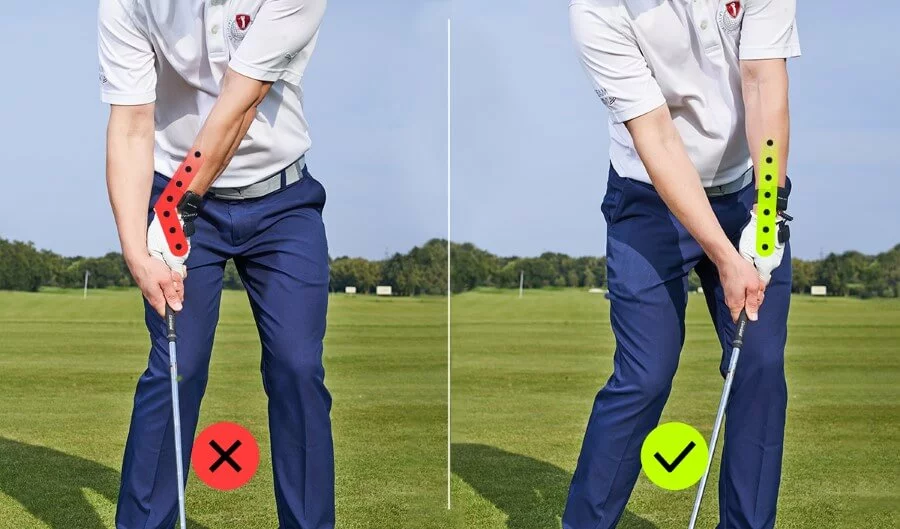
In golf, even small changes can have a big impact, and one important part that many people forget about for hitting consistent and strong iron shots is the wrist angle. Learning how to move your wrists and keep them in the right position during your swing can help you hit the ball better, get more distance, and control how the ball flies. Let’s explore why wrist angle is important and how you can use it to improve your iron shots.
What Is Wrist Angle?
Wrist angle is the bend that happens between your leading arm and the golf club when you take your backswing and downswing. If you’re a right-handed golfer, this means the angle between your left arm and the club. A common term for this is “lag,” which means holding onto this angle as you change from the top of your backswing to your downswing.
This angle is not fixed; it changes during the swing. The main goal is to create it correctly, keep it when you change directions, and let it go at the right time when you hit the ball.
Why Wrist Angle Is Important for Iron Shots:
1. Hitting the Ball First
Keeping the right wrist angle when you hit the ball helps the club hit the ball before it touches the ground, which gives you that clean, strong hit that better players make. This is called compressing the ball, and it helps you hit the ball with more power.
2. Distance and Spin Control
Holding the lag (wrist angle) acts like a spring that’s loaded with energy. If you let go of it too soon (known as casting), you waste that energy, which results in weak, high shots. A good release allows you to swing the club faster, improves the spin, and helps you get more distance.
3. Consistent Ball Flight
Wrist angle also affects how your club leans when you hit the ball. If the club leans forward, it helps the ball fly straighter and lower. Without this lean, the shots tend to rise too high, losing distance and control.
How to Work on Wrist Angle
1. Use a Mirror or Video
Practice your swing slowly while watching your wrists in key positions, especially when you are halfway back, at the top, and halfway down. At the top, you should see a nice 90-degree angle between your arm and the club shaft.
2. Drill: The Pump Drill
Swing to the top, then pause, and slowly move halfway down and back up three times, focusing on keeping your wrist bent. On the fourth move, swing all the way through while holding the lag until just before you hit the ball.
3. Use Tools like a Wrist Trainer or Impact Bag
Try using things like wrist training tools or impact bags to help you feel how to make solid contact and keep your hands in the right position when you hit the ball.
Common Mistakes to Avoid:
Early Release (Casting): Letting go of your wrist angle too soon in the downswing, which leads to weak hits and less power.
Over-Bending or Not Bending Enough: Bending your wrist too much can create problems, while too little bending can cause you to lose distance.
Flipping at Impact: Trying to lift the ball into the air instead of hitting down and through with the club leaning forward.
The angle of your wrist might not be something you can see easily, but it definitely affects how well you hit your iron shots. If you learn to keep and let go of this angle in the right way, you will gain more strength, make better contact with the ball, and have a more powerful shot. It’s important to know that the key is not only in how you swing; it’s in that brief moment before you hit the ball when your wrists do their crucial work.
When you practice next time at the driving range, don’t just focus on how you hold your body or the swing path, start getting better at controlling your wrist angles. This might be what you need to take your iron shots to the next level.
-Bharat Singh Rajawat
NGAI “A” Certified Coach
Protouch Golf Academy.
 Add Listing