
News
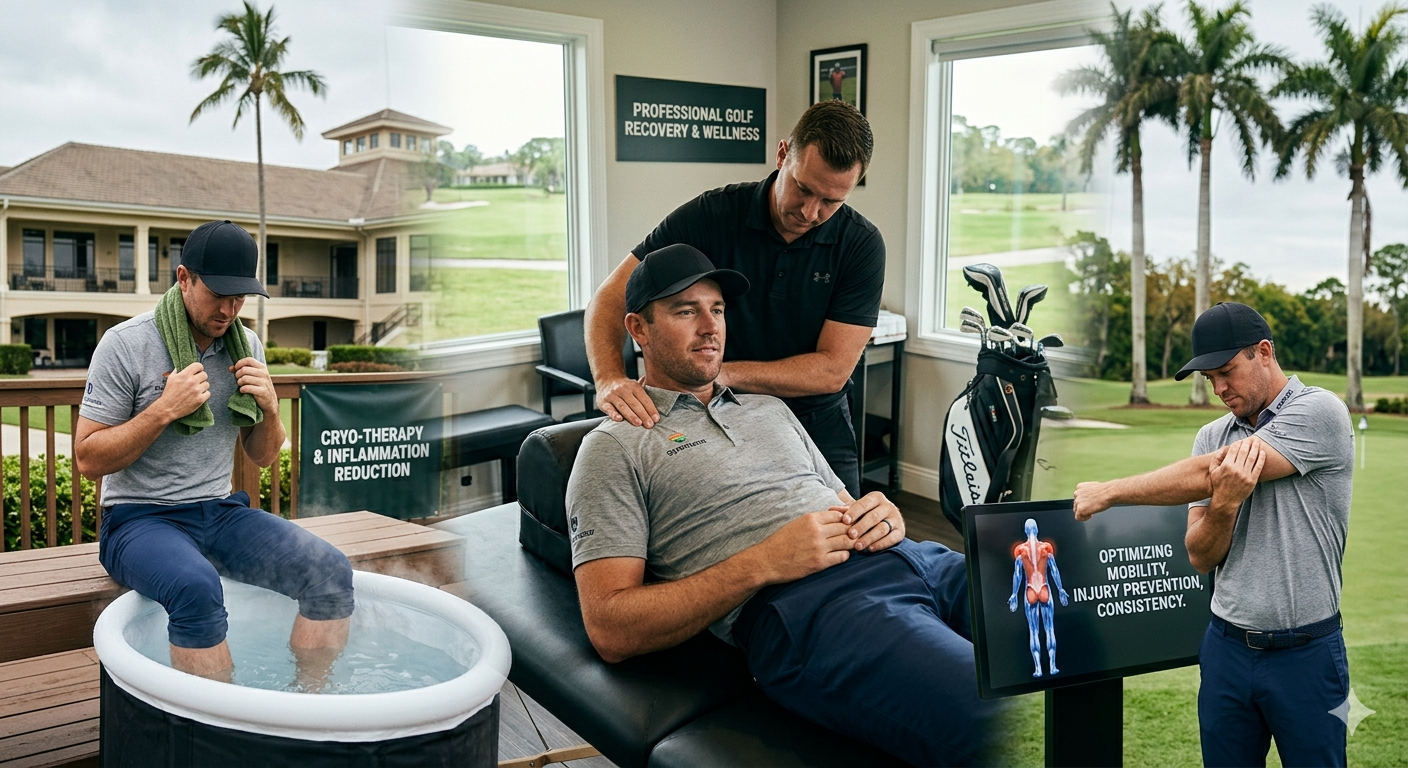
Though often perceived as a low intensity sport, golf, especially competitive golf, demands a lot of physical and mental intensity from athletes. In competitive golf, golfers mostly play a total of 72 holes over four consecutive rounds, and each round takes a good amount of four to six hours to finish. These long hours during each round requires sustained concentration, repetitive swings, prolonged hours of walking on the course, at times while carrying one’s own golf set, and emotional control and focus under pressure. Thus, recovery plays a significant role in shaping a golfer’s performance on the course in the following round by preventing injuries, reducing fatigue, and maintaining performance by gathering focus, mental strength and perfection.
Recovery in itself is a process. Not just in golf, but in any other sport, recovery plays a vital role in shaping a sportsperson’s game before and during a match, and even after a match, when the athlete prepares for the next big game. Physical recovery returns the body to an optimal state after physical stress and mental recovery returns the brain to calmness and composure by getting rid of psychological stress. Recovery for every sport, particularly in golf, helps in:
a. Releasing sore muscles.
b. Releasing the stiffness in muscles, thereby avoiding injury.
c. Improves concentration and emotional well-being.
d. Enhances future performances by preparing for the next competitive round.
e. Promotes long term physical and mental health of an athlete, particularly a golfer.
Without proper recovery before the next round of game, a golfer and any other athlete might face severe physical and mental fatigue, over exhaustion, poor decision making, ineffective game techniques and even injury.
A few important methods of recovery for golfers include:
1. Rehydration: Golfers tend to become dehydrated during the rounds of golf as they are exposed to severe heat for four to six hours of one round. Even mild dehydration can cause health issues on the course, and can negatively affect concentration, coordination and physical performance. Golfers should drink sufficient water before the beginning of the round, and keep electrolyte rich beverages with them while playing in hot and humid weather conditions. These restore fluid balance in the body, support coordinated muscle function, reduce physical and mental fatigue, and improve cognitive performance throughout the round of golf.
2. Post Competition Nutrition: A golfer usually maintains a strict diet which is beneficial for them to maintain healthy nutrition as well as physical fitness. A round of golf drains out a lot of energy and therefore it is important for golfers to replenish energy and repair muscle tissue after a round of competition. Usually, sports nutritionists recommend consuming a balanced meal within two hours of a competitive round of golf. A balanced diet would include the consumption of carbohydrates, like rice, fruits, potatoes, and whole grains, proteins like eggs, chicken, fish, dairy products and legumes and vitamins and minerals. Carbohydrates help in replacing glycogen stores exploited during the round. While protein supports muscle repair and recovery, vitamins and minerals assist in overall recovery and helps in reducing muscle inflammation.
3. Active Recovery and Stretching and Mobility Exercise: After a round of golf, golfers prefer taking a light walking or cycling, gentle mobility exercises and stretching routine. Golf requires rotational movements that create stiffness in muscles in the hips, lower back, thoracic spine, forearms, hamstrings and shoulders. Easy to do stretching and mobility work ensures flexibility, reduces and releases muscle stiffness, and supports efficient swing mechanisms. They also ensure faster recovery by enhancing circulation and promoting muscle relaxation.
4. Sleep and Rest: When it comes to recovery, sleep and rest work as one of the best recovery techniques, both mentally and physically. In general, doctors prescribe proper sleep for 7-9 hours per day for any individual, and most importantly for sportspersons. Going to bed on time and sleeping for at least 7-9 hours help in repairing damaged tissues by releasing growth hormones, and restoring energy levels. Sleep also consolidates learning and motor skills by improving concentration, and regulates mood.
5. Mental Recovery: Golf demands significant concentration, attention, decision making, focus, emotional strength and control. Mental fatigue can be more detrimental for a competitive round of golf even when physical fatigue is minimal. Therefore, working on mental strength before and after a round of golf is by far the most important technique. Meditation, deep breathing exercises, engaging in hobbies and spending quality time with friends and family can be the easiest ways of mental recovery. Expert coaches always suggest a golfer to not go into critical analysis or thinking deeply about the round of golf which the golfer has already finished playing. These steps reduce stress, improve emotional well-being and make a golfer ready for the next round of competitive golf by restoring concentration and mental strength.
Coaches play an important role in the recovery of a golfer. They not only educate golfers about healthy recovery techniques, scheduling appropriate training loads, encouraging healthy eating and sleeping regime, monitoring signs of fatigue, and supporting a golfer’s mental wellness. This can happen truly only when the coach and student have a true bond.